Observed
Visual evidence required a viable service
The interface alone could not resolve capture, time, incentives, security, or responsibility.
Brevity AI · Healthcare · Clinical workflow
The interesting question was not whether AI could summarize surgical video. It was whether a summary could enter a real clinical workflow without losing the source, adding more work for clinicians, or quietly taking responsibility for a decision it should not make.
Observed
The interface alone could not resolve capture, time, incentives, security, or responsibility.
Pilot signal
The public record reports unanimous 5/5 confidence; the exact reviewer count, note scores, and rating instrument were not preserved.
Not proven
No diagnostic-accuracy, efficacy, clearance, or broad-adoption claim is made.
Service challenge
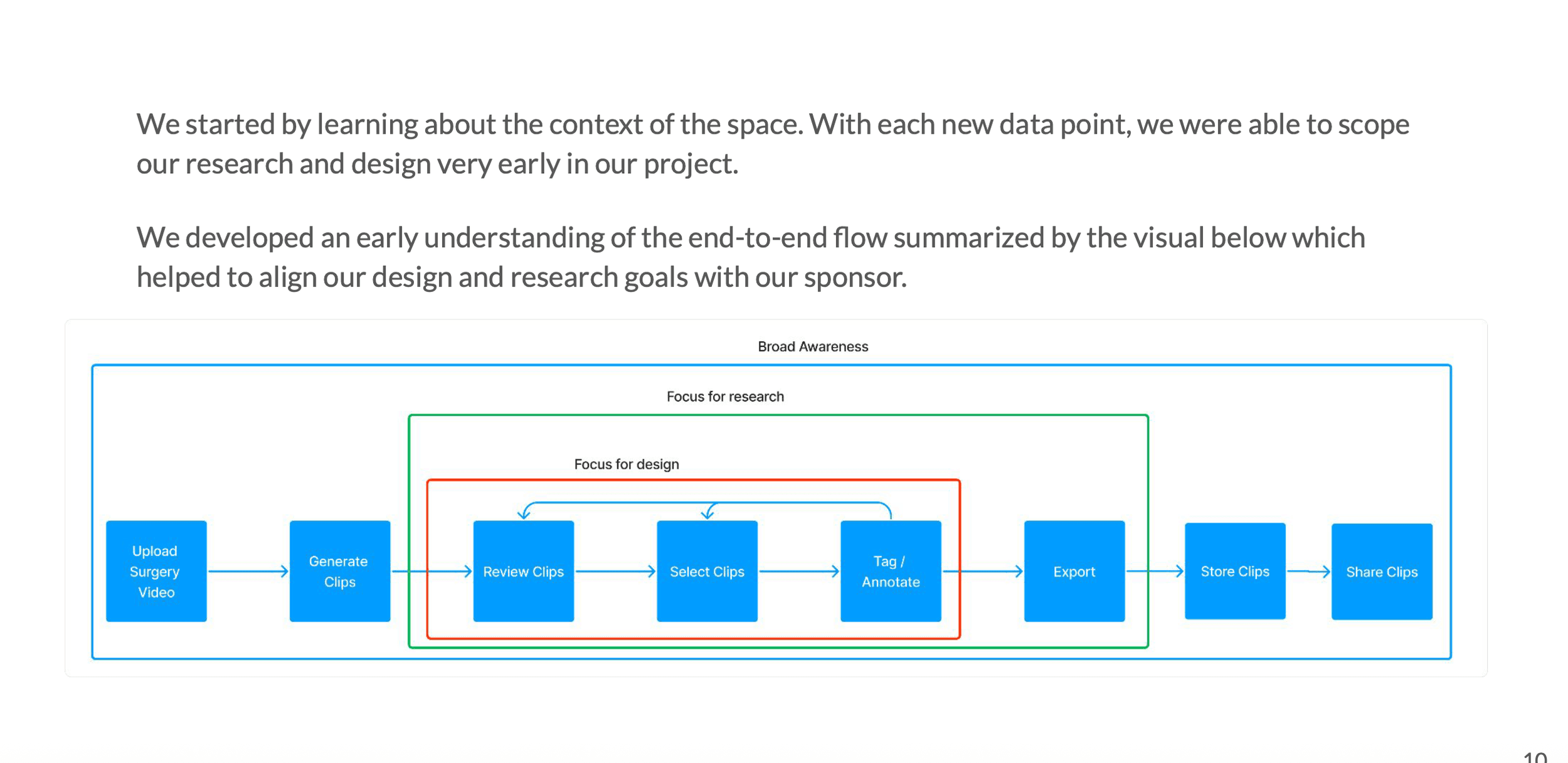
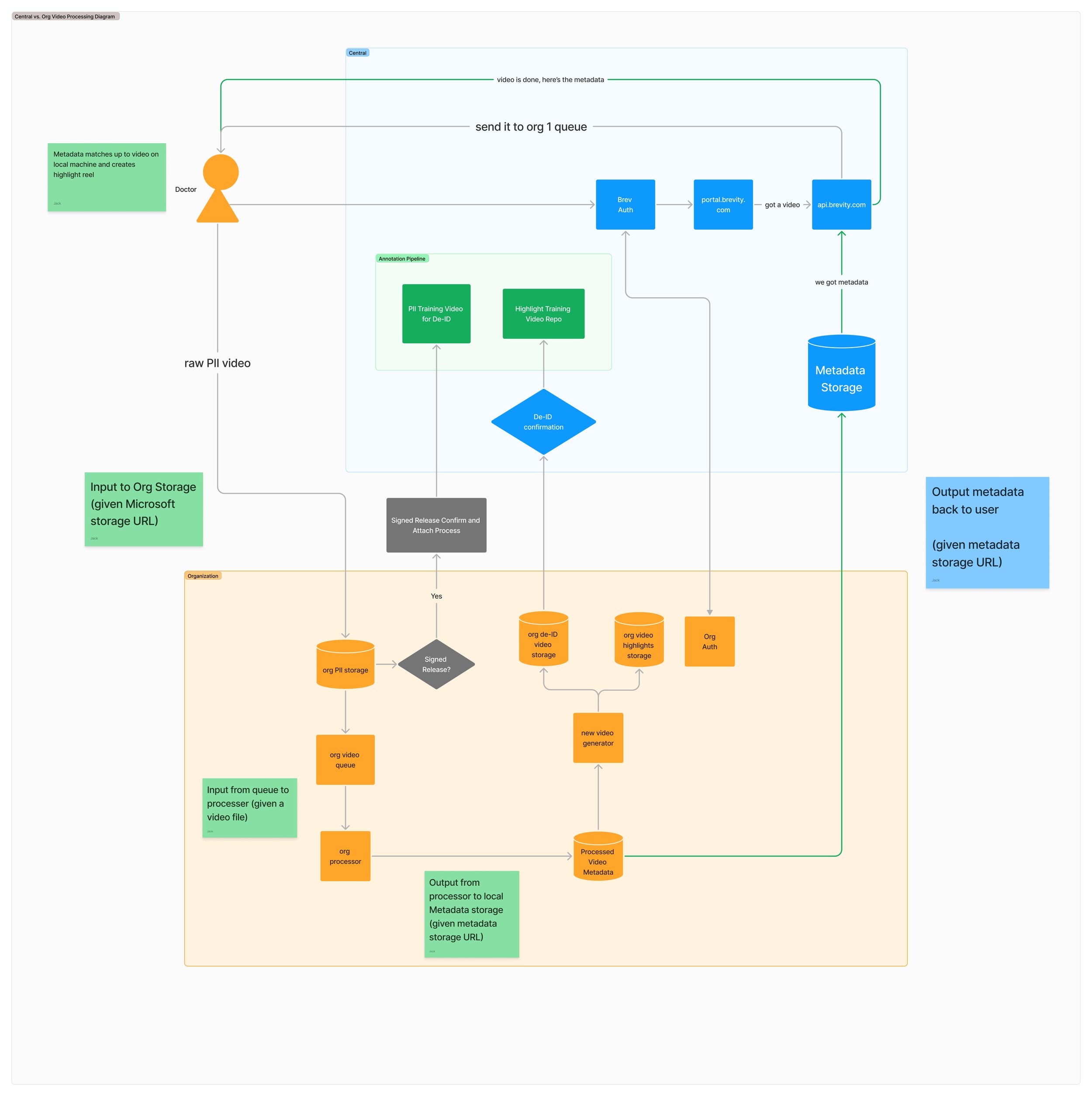
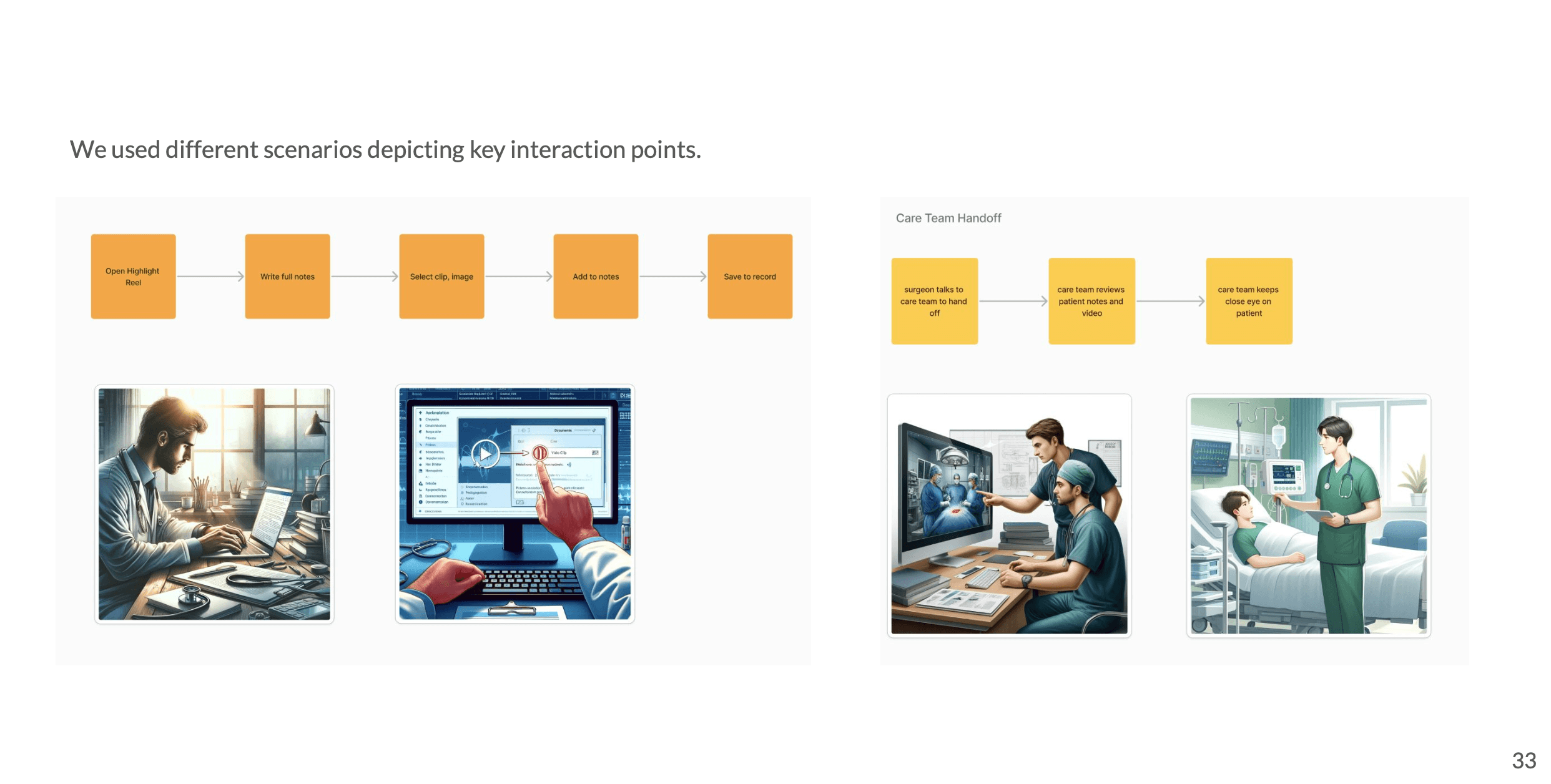
The interface could not solve who recorded the procedure, how the source moved securely, what evidence the summary preserved, or who remained responsible for the decision. Those dependencies shaped the product as much as the summarization model did.
Future-state service
The future-state service kept the original recording available and made the proposed summary reviewable in context.
Responsibility
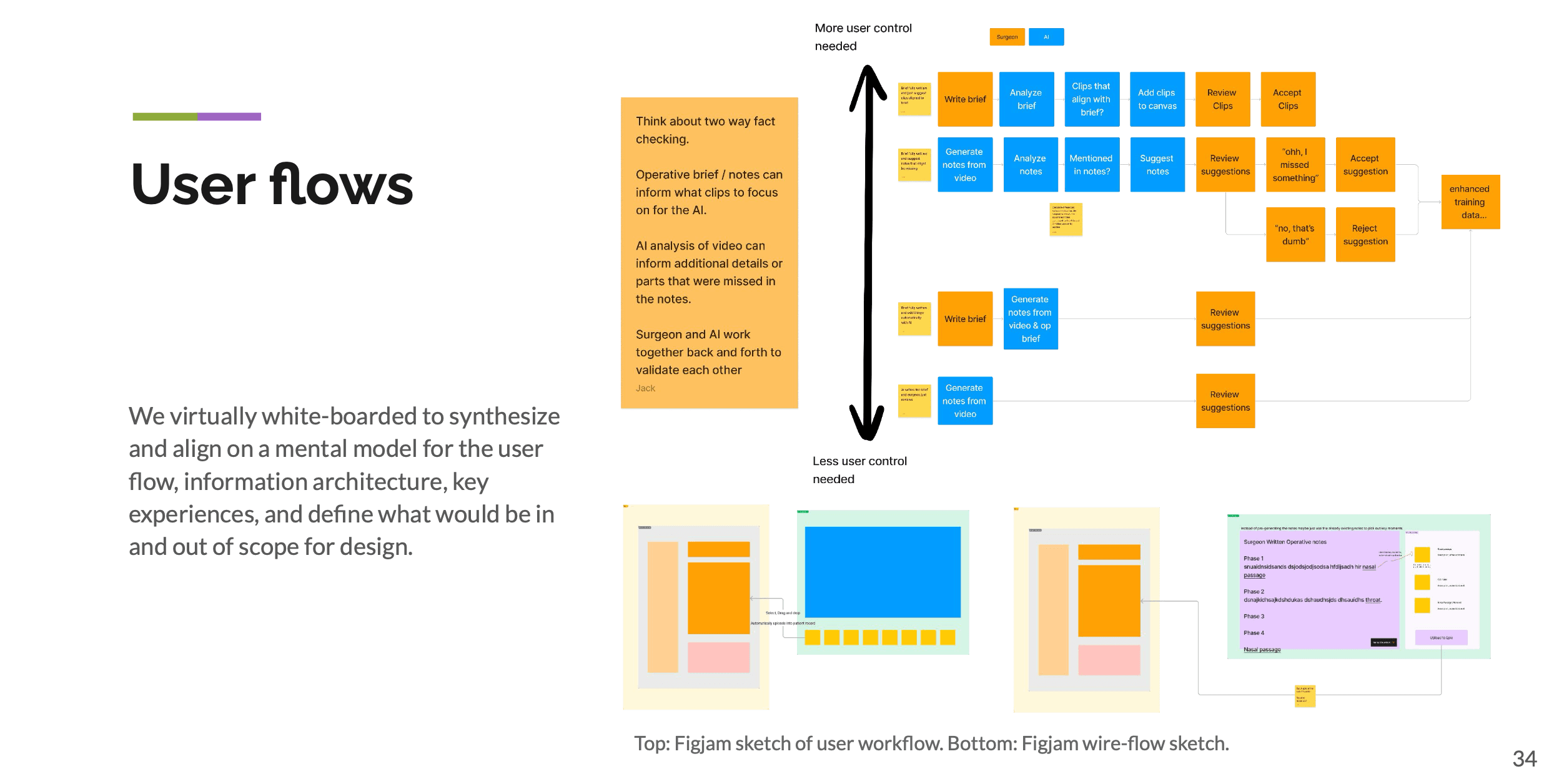
Residents provided source context. AI proposed relevant segments. Service infrastructure protected access and recovery. Attending clinicians reviewed the evidence and retained responsibility.
Research and synthesis
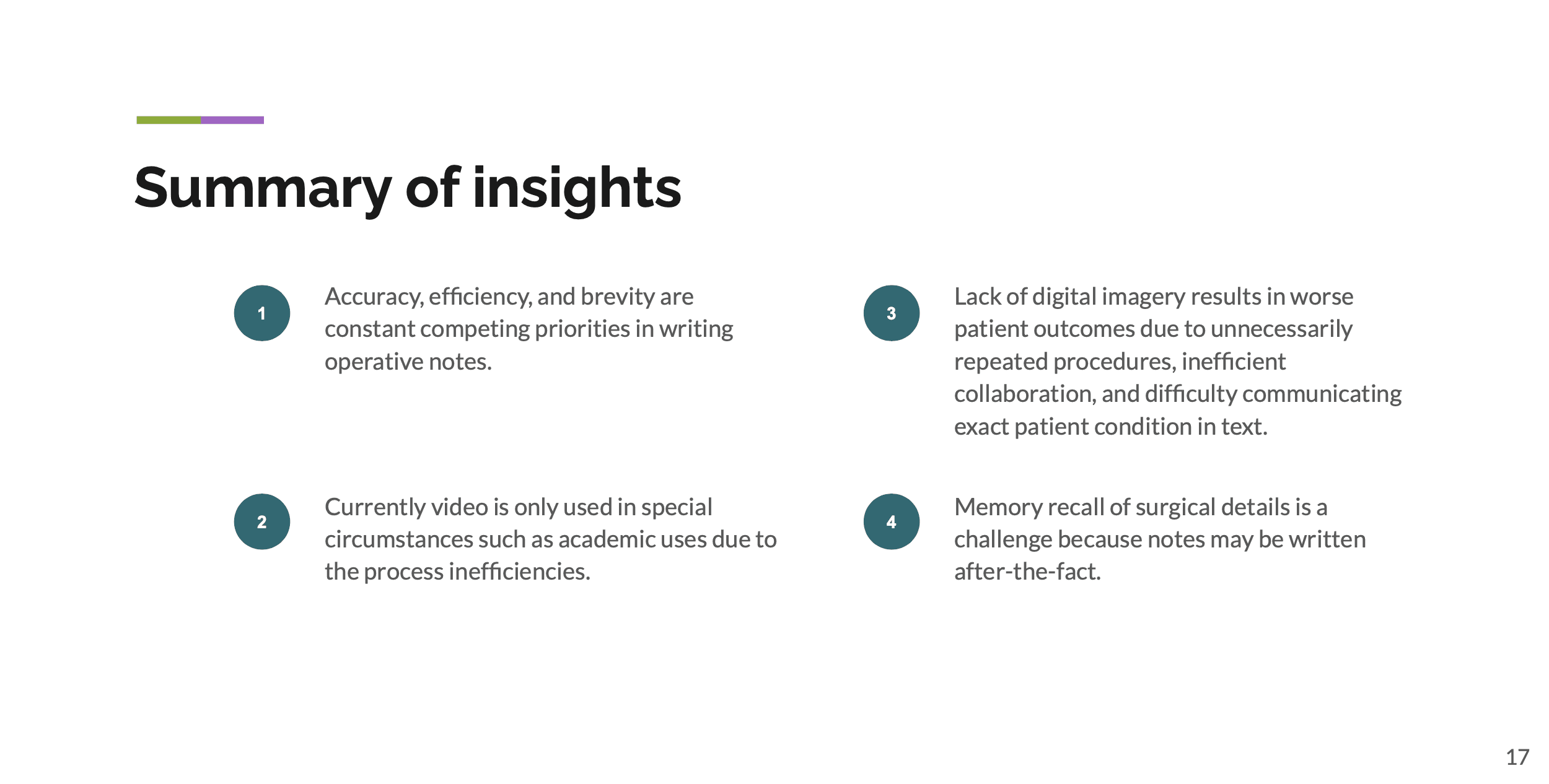
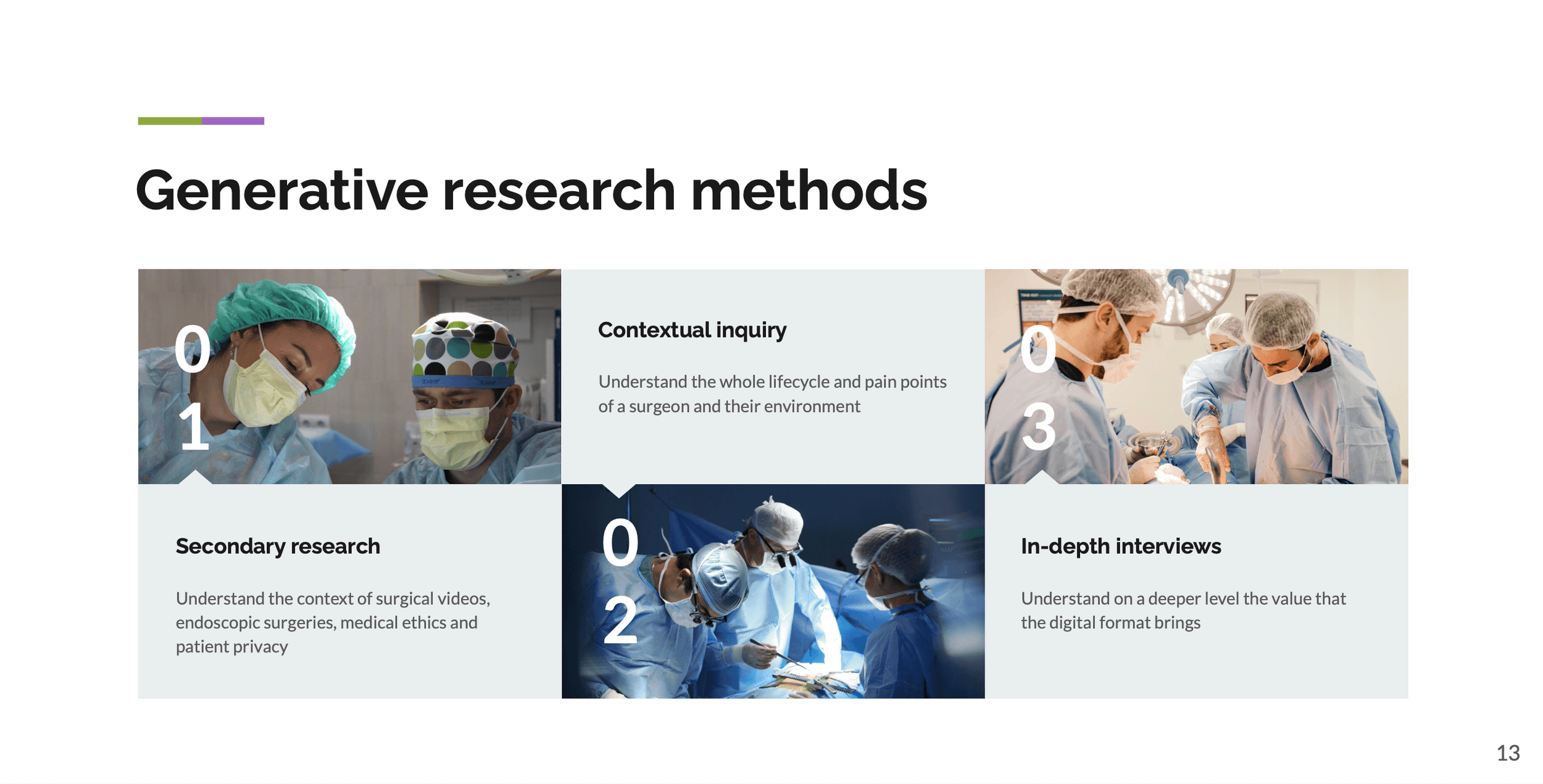
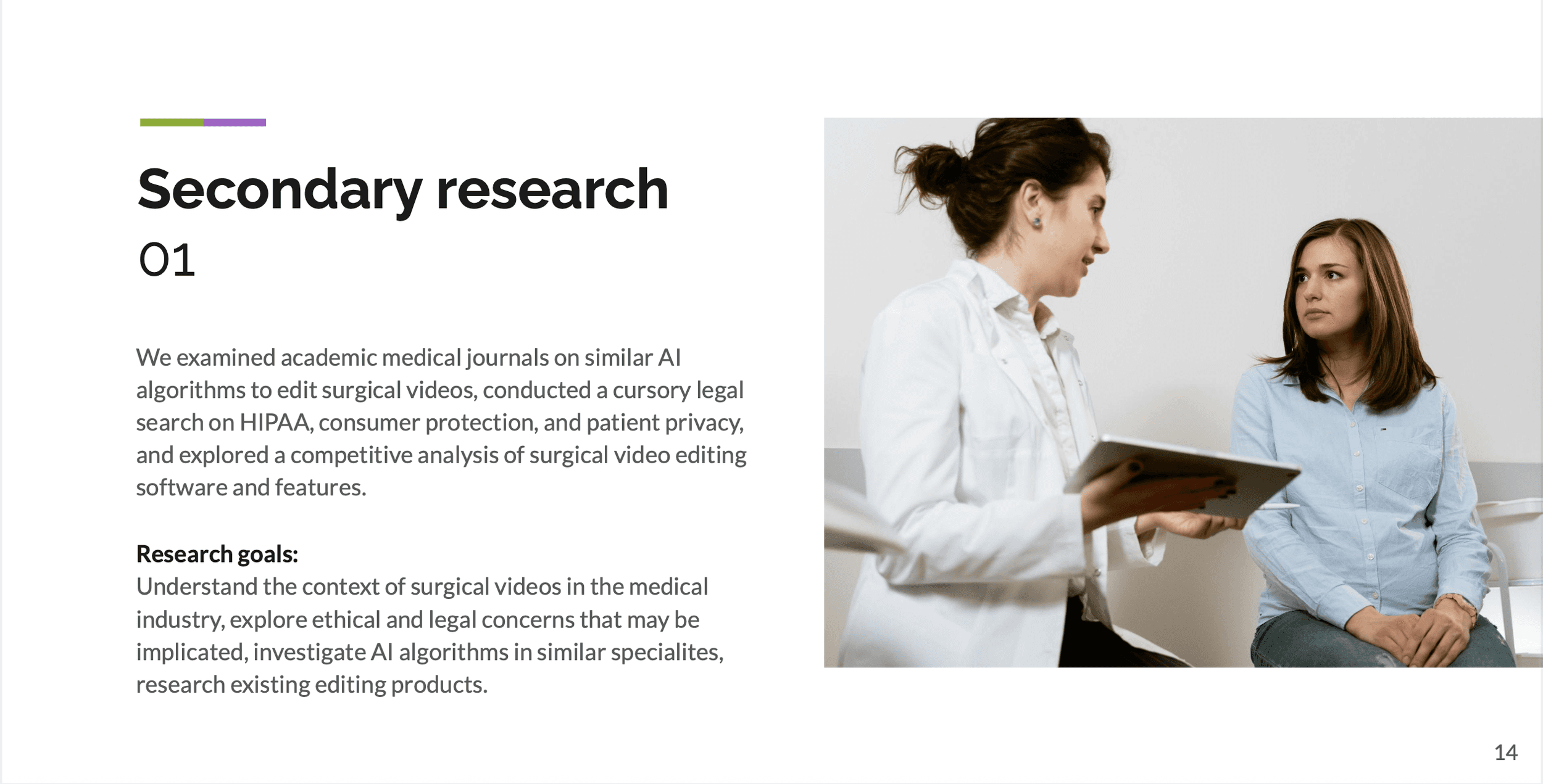
The Chronicle team combined secondary research, contextual inquiry, and interviews with ENT surgeons and residents. The work connected observed friction to specific service touchpoints rather than treating summarization as an isolated feature.
Concept development
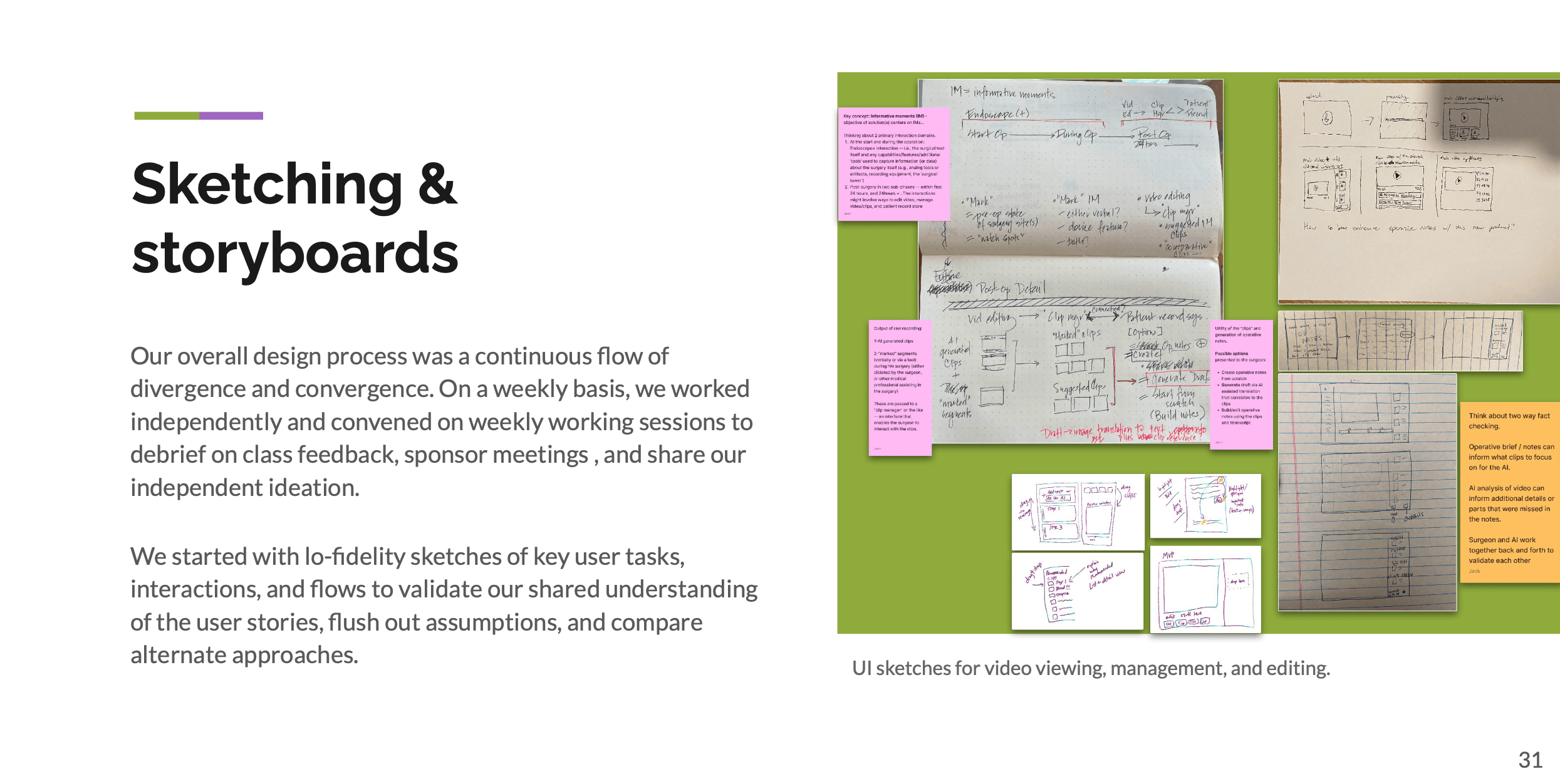
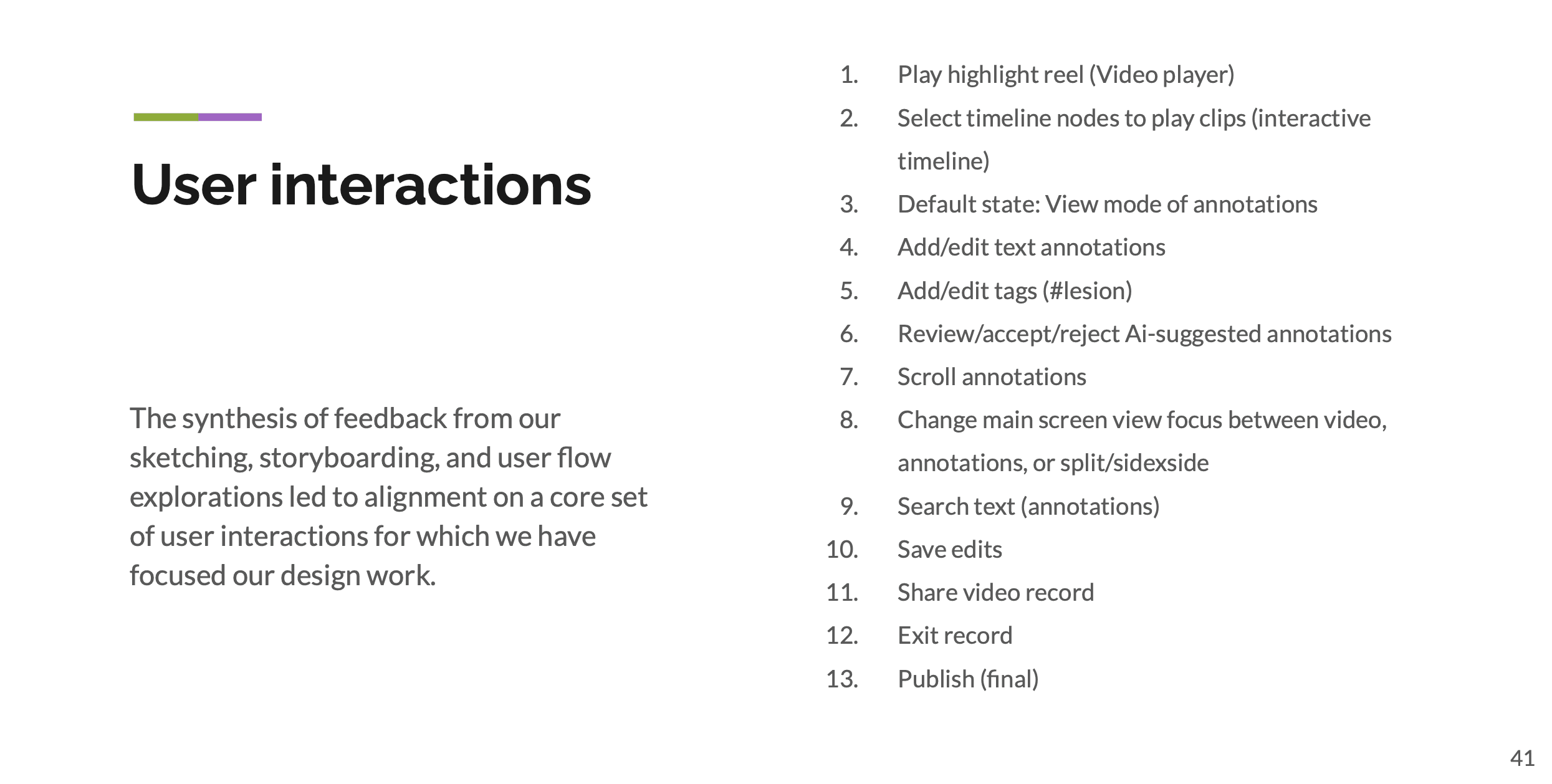
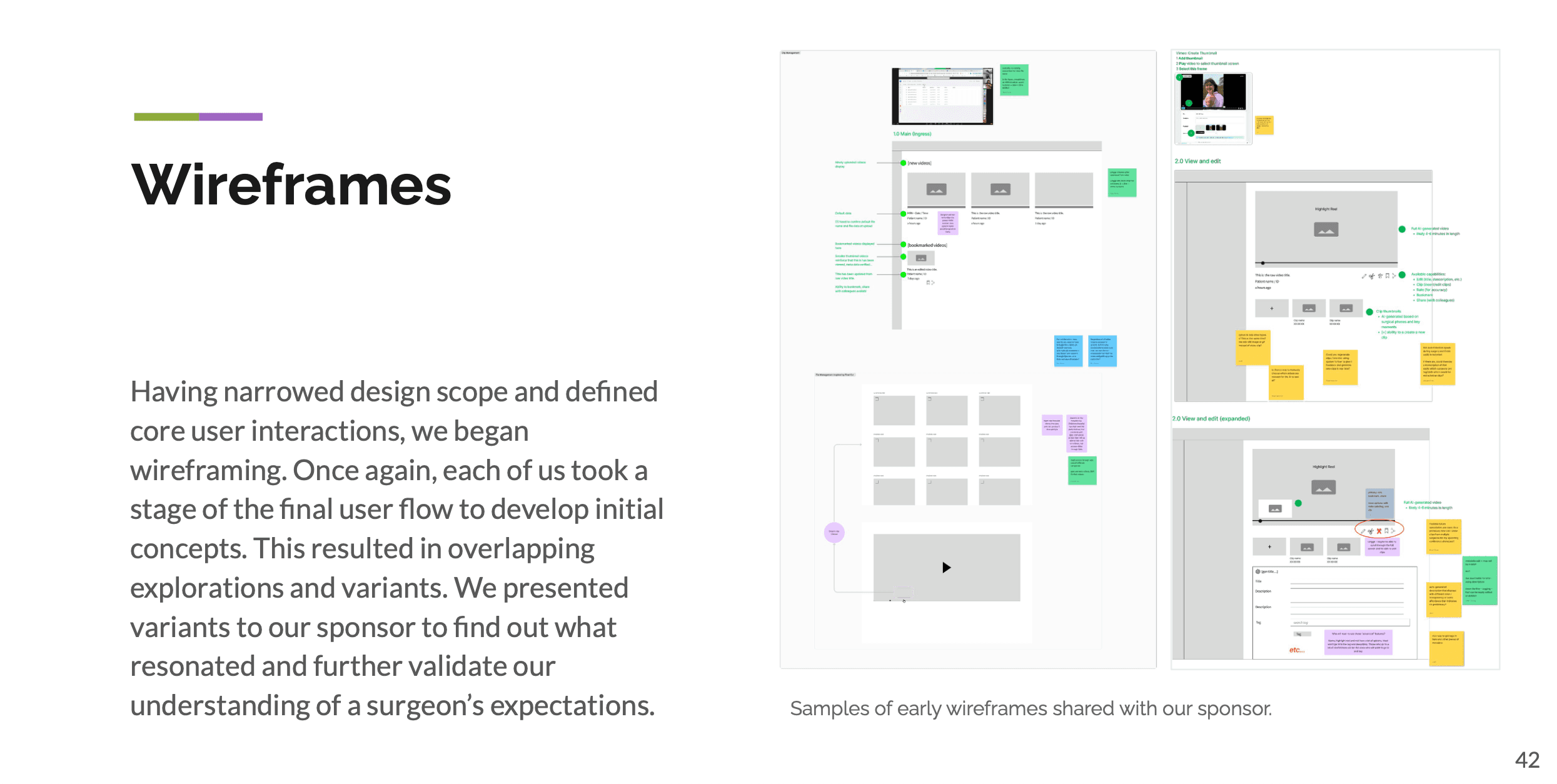
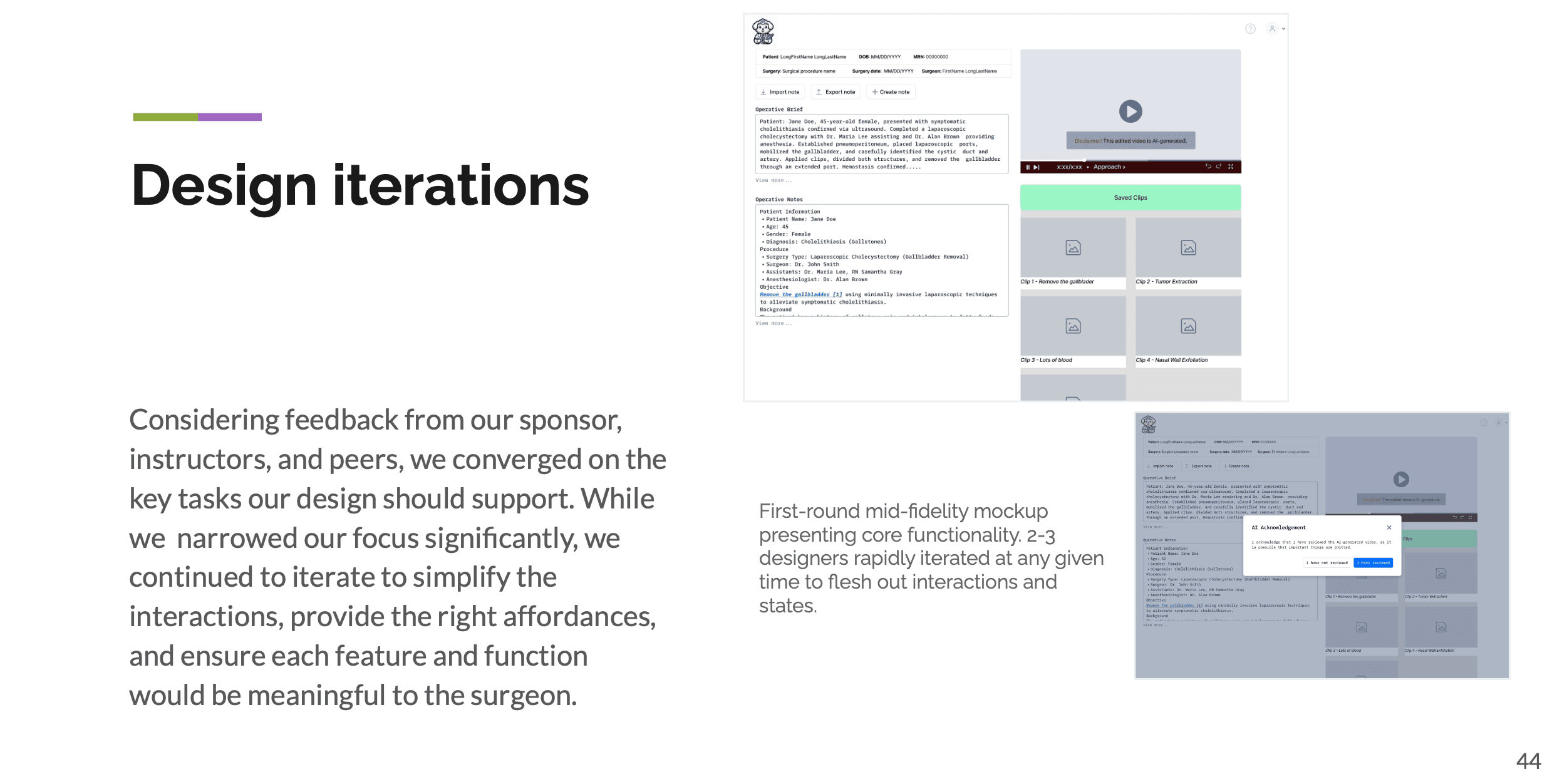
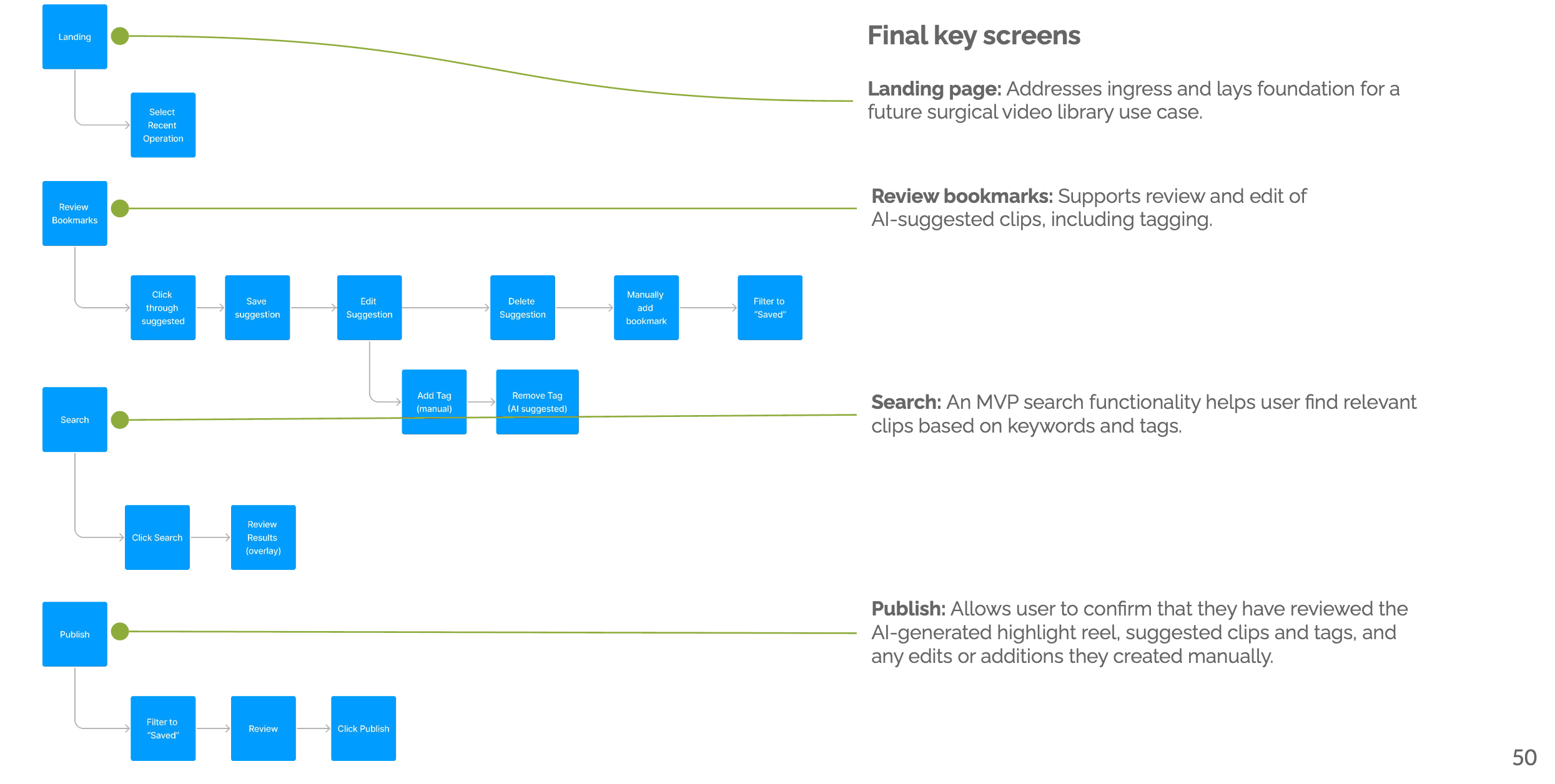
Thirteen priority interactions created a shared design target. Wireframes and successive iterations then tested how navigation, playback, annotation, and evidence states could work together.
Evaluation and delivery
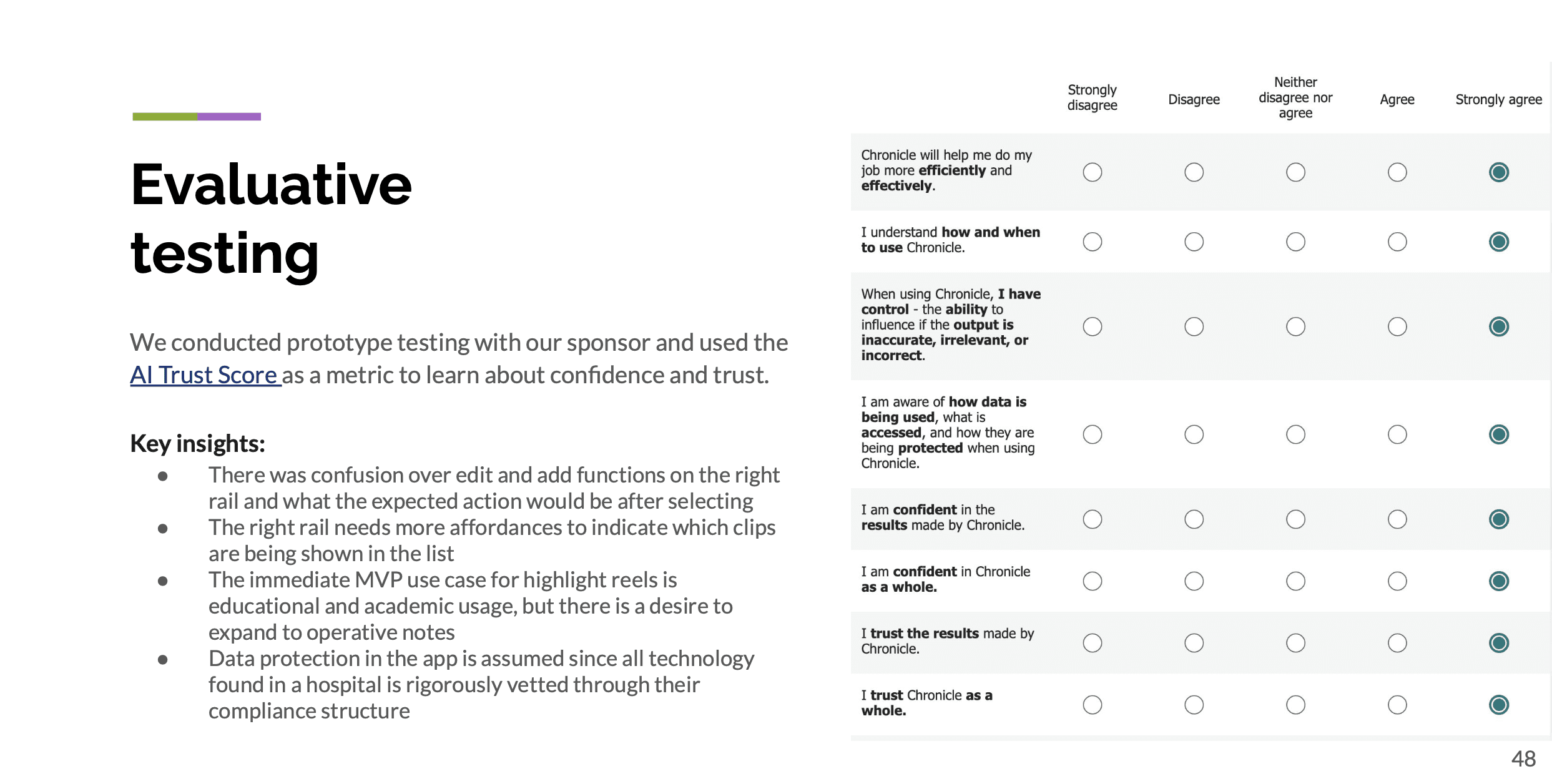
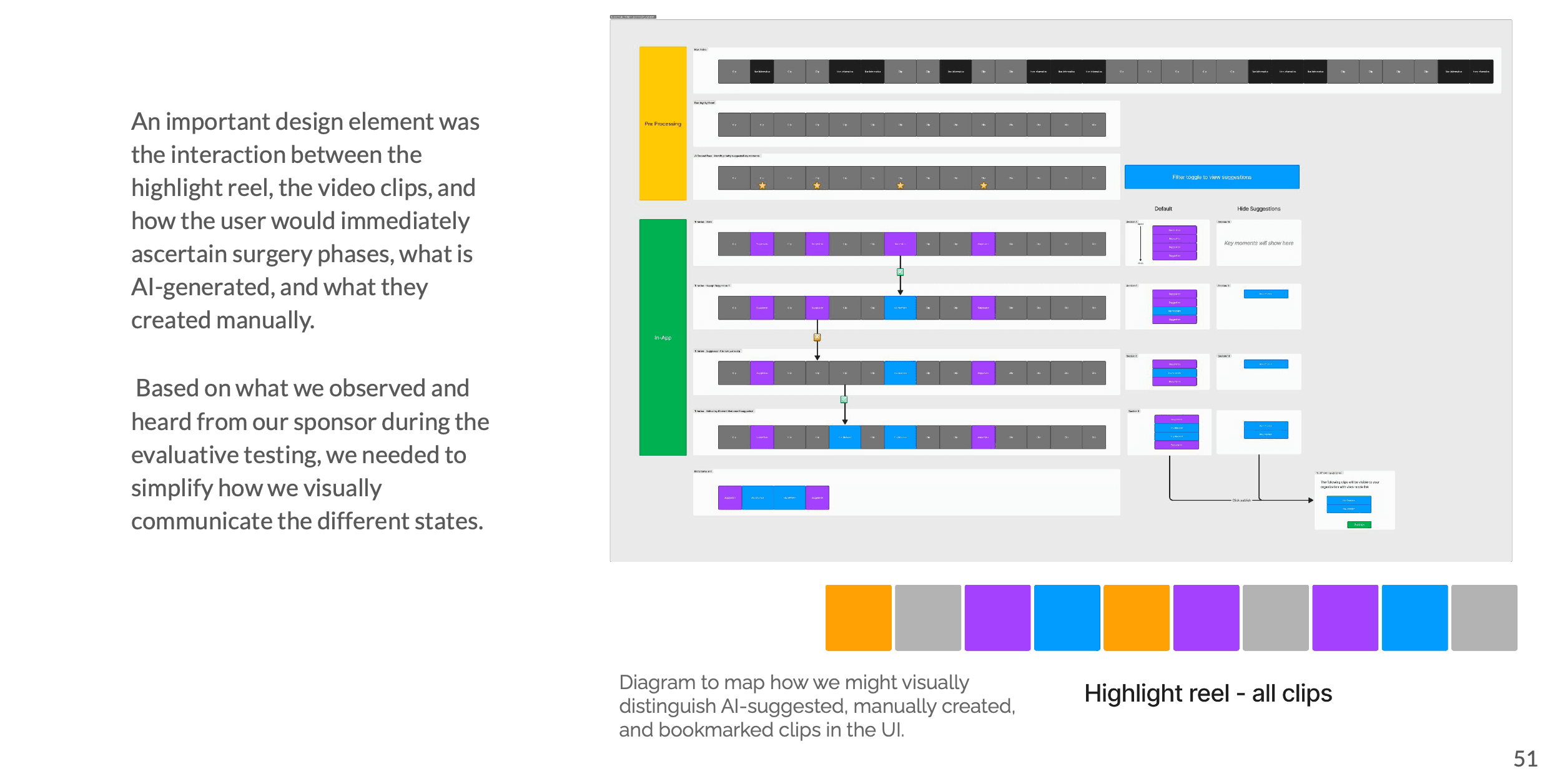
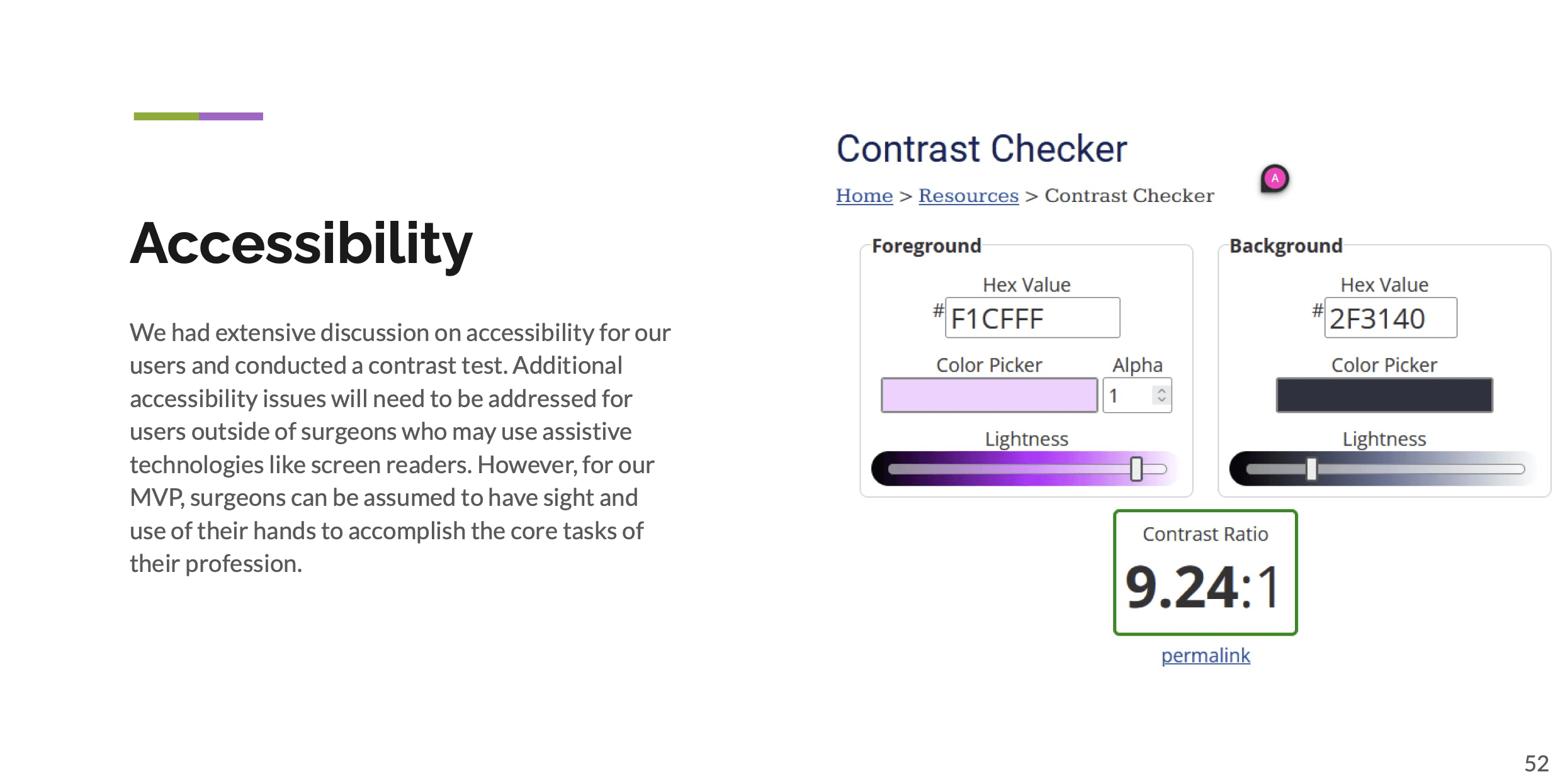
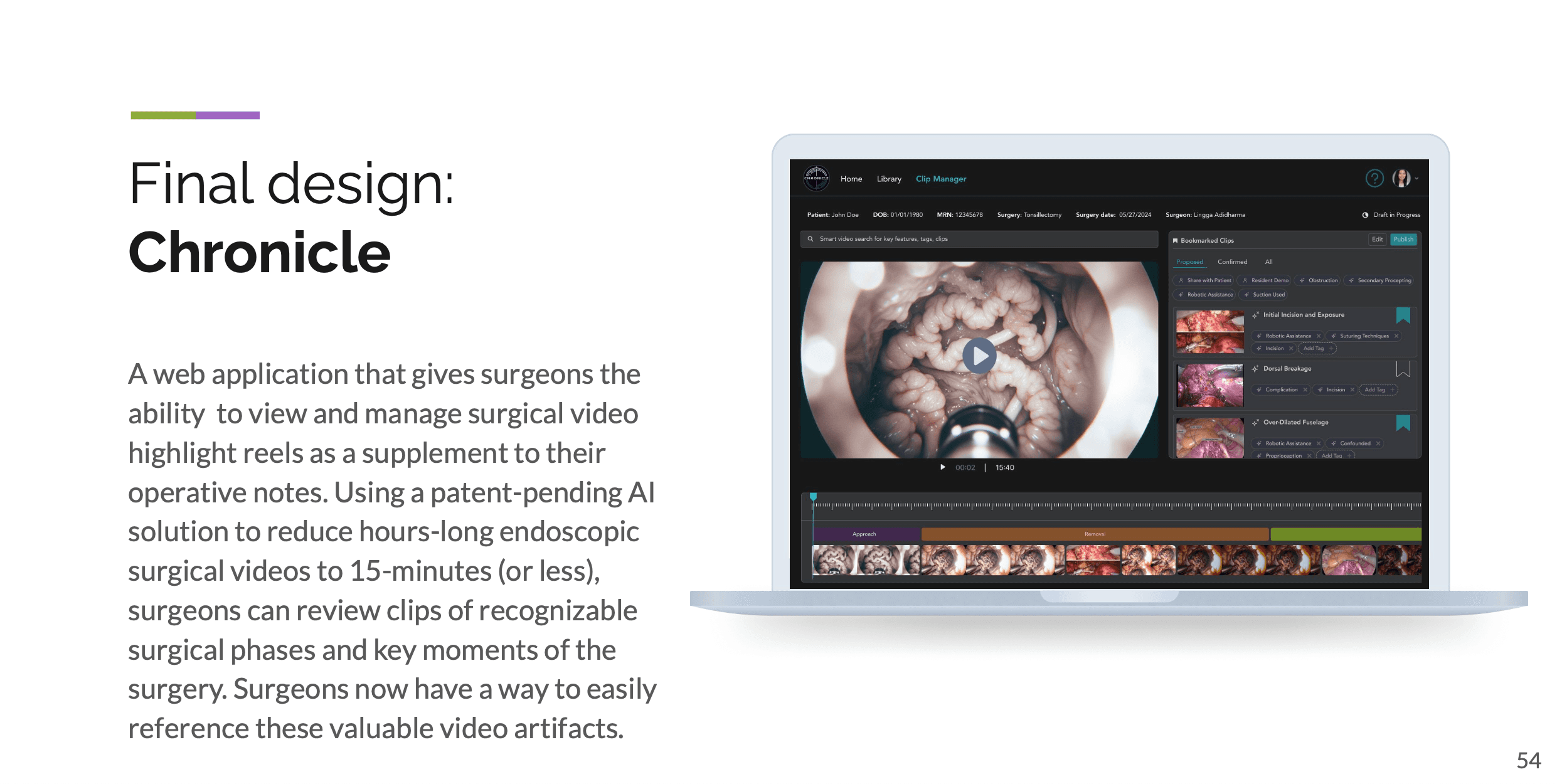
Evaluative testing with peers and the sponsor informed the final interaction flow. The delivered concept distinguished AI-suggested, manually created, and bookmarked clips and documented accessibility considerations.
From concept to operational MVP
After Chronicle, I co-founded Brevity AI and served as CPO and sole UX lead. I worked with a part-time CTO and clinical, technical, legal, compliance, IRB, and incubator stakeholders to translate the concept into a minimum flow across capture or retrieval, secure upload, summarization, review, and storage.
Use-case pivots
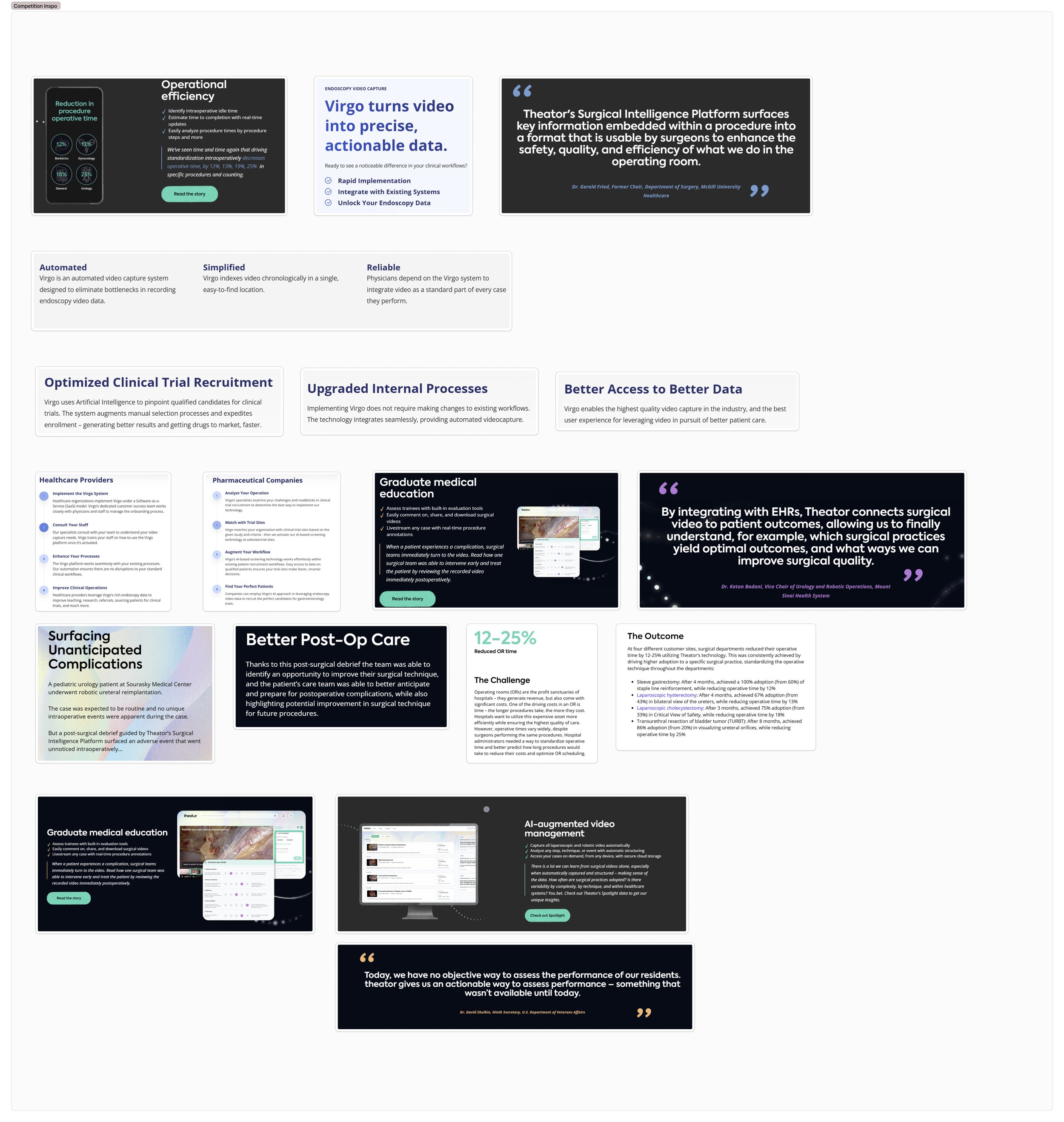
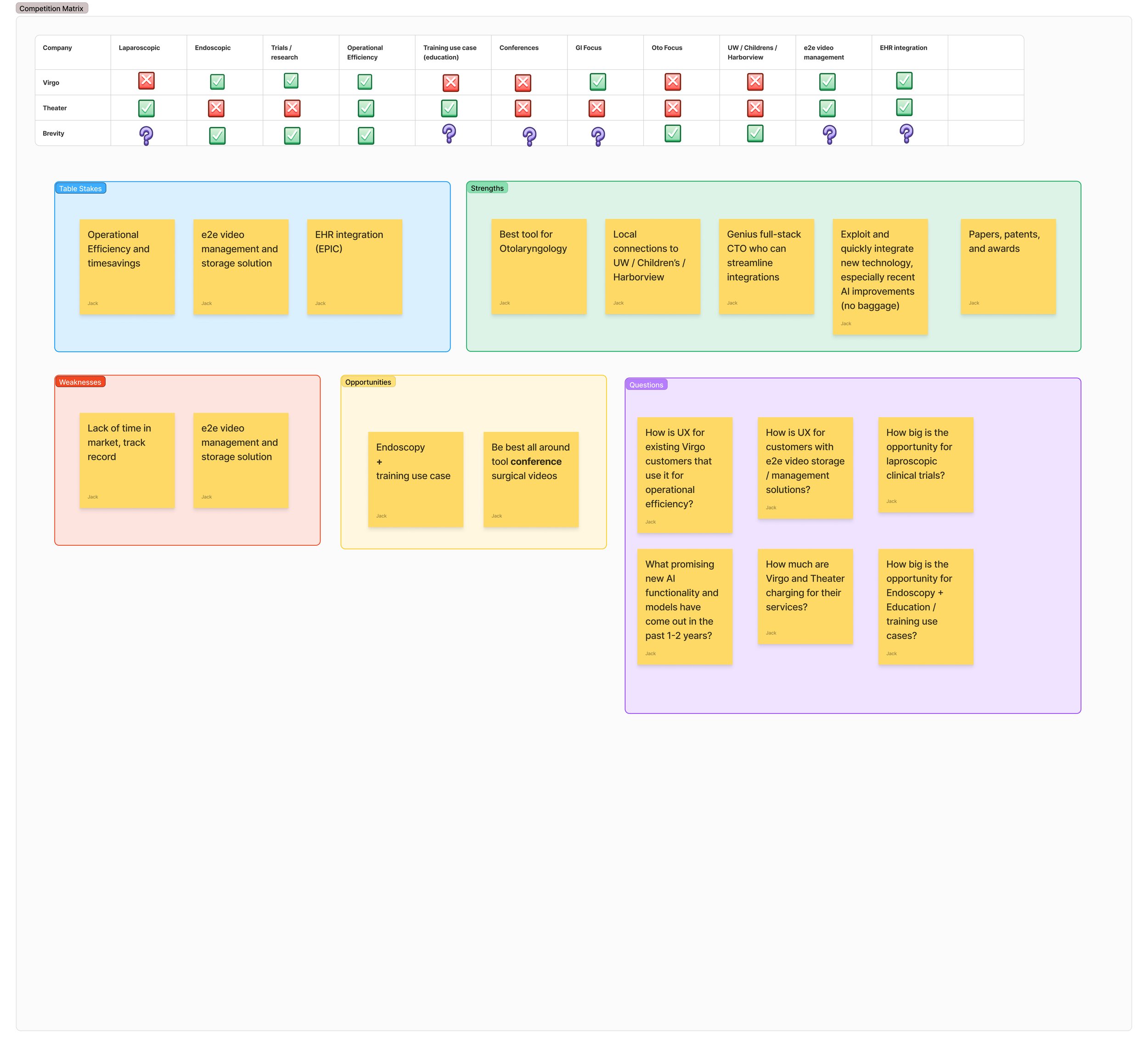
Procedure documentation was deprioritized, conference preparation remained exploratory, and malpractice-risk reduction failed validation. Consultation support advanced because it fit existing work more closely.

Pilot evidence
The public record describes six ENT consultation videos and reports unanimous 5/5 confidence in the summarized-video condition. Exact reviewer count, note scores, and the rating instrument were not preserved, so this remains a promising confidence signal rather than evidence of clinical efficacy.
Outcome and limits
The work established the service model, high-fidelity interaction patterns, an operational MVP flow, use-case decisions, and a bounded pilot signal. Brevity closed because of funding constraints before broader institutional deployment could be tested.
Takeaway
In high-trust work, an AI experience must make three things clear: what evidence the system used, where a person must review it, and who remains responsible for the decision. The goal was a workflow useful enough to change the work and explicit enough to preserve human judgment.
Next case study